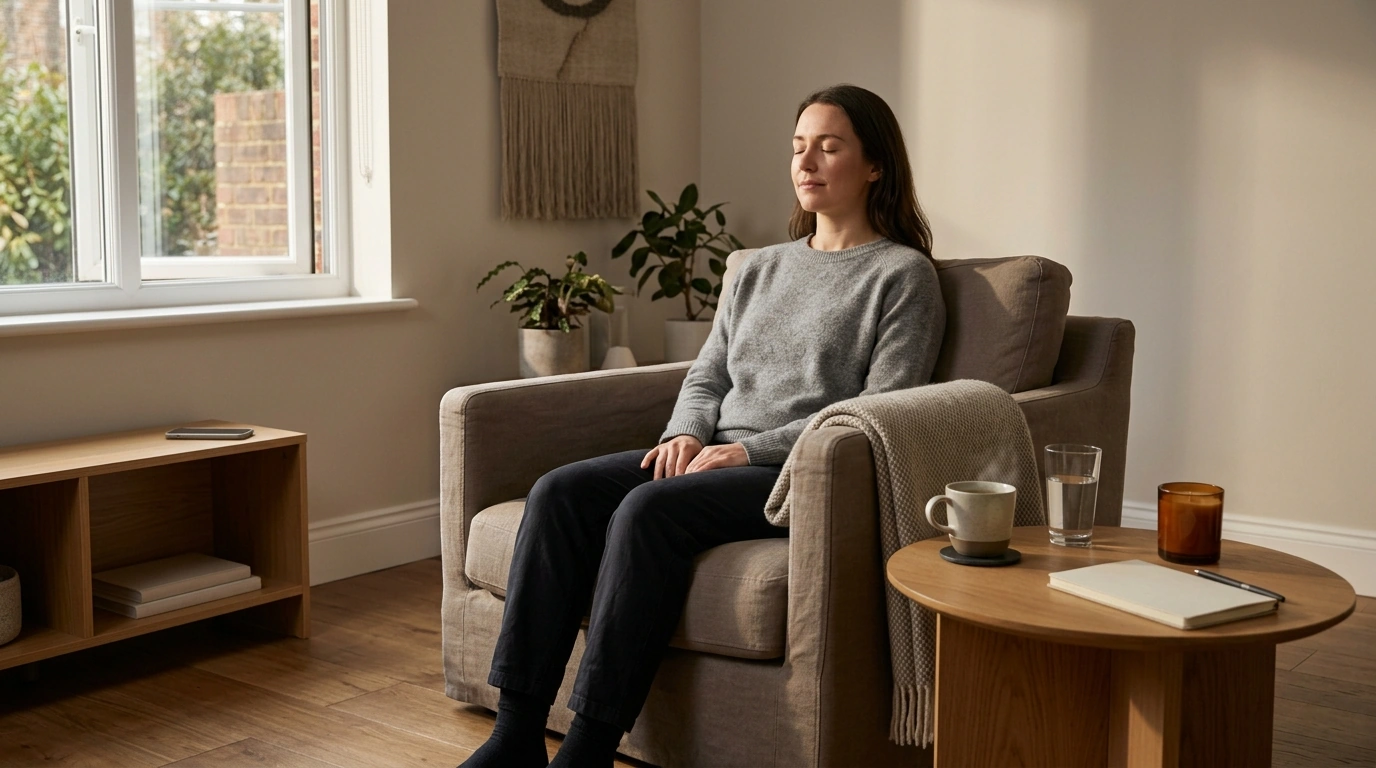
Clarity rarely arrives on command; it usually shows up after the nervous system gets a chance to settle. When the mind feels crowded, trying to “think your way out” can backfire—especially when stress is already draining attention and patience. A short, repeatable checklist reduces decision fatigue, makes self-care feel doable, and turns “I need a break” into a plan that fits real life—whether you have two minutes between tasks or a full evening to reset.
Stress can affect the body in very real ways (tight muscles, shallow breathing, upset digestion), which is one reason small physical cues—breath, posture, hydration, light, and sound—often help more than forcing a mental breakthrough. For a deeper look at stress and the body, the American Psychological Association offers an excellent overview.
Over time, your checklist becomes a shortcut: less negotiating, less scrolling, less starting over. You’re not trying to manufacture calm; you’re giving your body a few predictable signals that it’s safe to soften.
| Stressor | Fast adjustment | Why it helps |
|---|---|---|
| Bright light | Use a lamp or dimmer; face light away | Signals the body to ease alertness |
| Noise | White noise, earplugs, or one calming playlist | Reduces constant scanning for interruptions |
| Clutter in sight | Move just one pile into a basket | Lowers visual load without a full cleanup |
| Phone pull | Place phone across the room; enable focus mode | Stops micro-stress spikes from checking |
Use this as written the first few times, then tailor it. The goal is not to do everything perfectly—it’s to reliably get from “spinning” to “settling.”
If you want a science-backed companion to breathwork and mindfulness, the National Center for Complementary and Integrative Health summarizes effectiveness, safety, and what to expect when you’re getting started.
| Time available | What to do | Best for |
|---|---|---|
| 2–5 minutes | Long-exhale breathing + shoulder drop + sip water | Fast calm during a busy day |
| 5–10 minutes | Body scan or quiet walk + one gentle stretch | Racing thoughts, restlessness |
| 10–20 minutes | Brain dump + one priority circle + calming music | Overwhelm and scattered focus |
| 20–30 minutes | Warm shower/bath or yoga flow + screen-free unwind | End-of-day decompression |
If sleep is part of your reset goal, the CDC’s sleep resources can help you understand why consistent wind-down routines matter and what supports better rest.
Use it daily if it supports you, or as-needed during stress spikes. A small, consistent time slot (like after lunch or before bed) plus quick micro-resets during the day tends to feel realistic and sustainable.
That’s common—silence can make thoughts more noticeable at first. Start with movement or sensory grounding (feel your feet, notice five things you can see), keep sessions short, and emphasize longer exhales; guided audio can also make it easier to settle.
A phone is convenient during the day, but screens can add stimulation—especially at night. Many people prefer a printed version for bedtime and a digital version for daytime; the best choice is the one that helps you feel less pulled and more settled.












Leave a comment