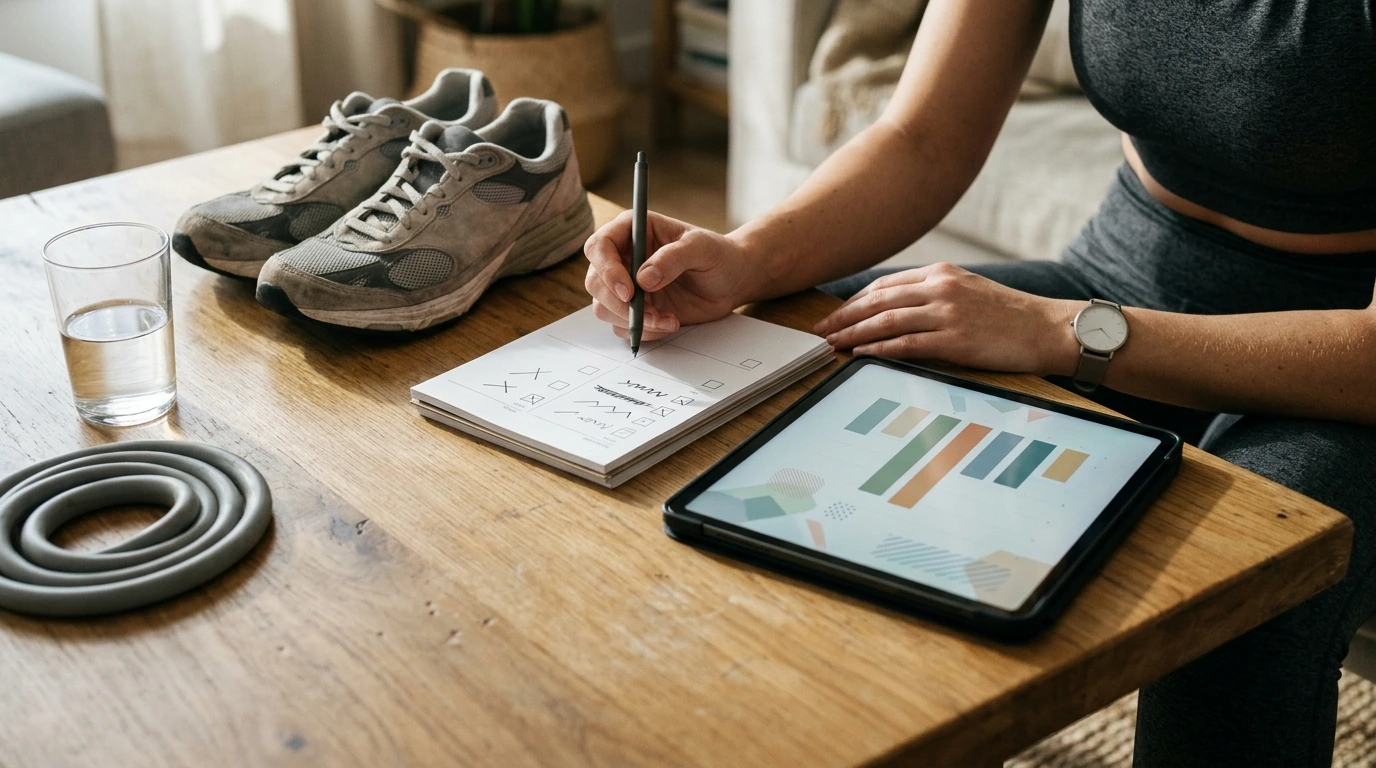
Progress feels motivating when it’s visible. A tracker that combines a clear checklist with AI-guided structure helps turn scattered workouts and wellness goals into a repeatable routine. Instead of spending hours logging every detail, a simple system highlights the few signals that actually predict results—training consistency, basic recovery, and one or two performance numbers that matter.
Below is a practical setup for what to track each day, how to run a fast weekly review, and how to choose a printable, digital, or hybrid format that stays realistic long-term.
For activity baselines, align training with recognized standards such as the CDC Physical Activity Guidelines and general exercise safety guidance from the American College of Sports Medicine (ACSM).
Daily tracking works best when it’s quick. Think checkboxes, a few numbers, and short ratings—enough to reveal patterns without turning your routine into homework.
Sleep is often the hidden lever for performance and appetite regulation. If sleep has been inconsistent, use a simple “hours + quality rating” and compare it to training performance and cravings. The NIH overview on healthy sleep is a helpful reference for the basics.
A weekly review turns raw checkmarks into strategy. The goal isn’t perfection—it’s noticing what’s working and adjusting one variable at a time so next week runs smoother.
| Prompt | Example answer |
|---|---|
| What went well? | Completed 3 strength sessions and increased deadlift top set by 5 lb |
| What got in the way? | Two short nights of sleep led to skipped cardio |
| One change for next week | Schedule workouts earlier; set a 10:30 pm screen cutoff |
| Minimum non-negotiables | 2 strength sessions + 7,000 steps/day average |
| One recovery action | Add 10 minutes of mobility after lifting |
“AI-powered” works best when it supports a clean structure instead of asking for more data. A good AI-guided checklist uses prompts that keep entries short and makes reviews easier to interpret.
A practical rule: if a metric doesn’t change your decisions, it doesn’t need daily tracking. Keep the essentials, then use the weekly review to decide what to tweak.
Consistency matters more than the tool. Choose the format that fits the moment you’ll actually fill it out—right after training, during breakfast, or before bed.
| Format | Best for | Watch-outs |
|---|---|---|
| Printable checklist | Fast daily check-offs, habit building, visual accountability | Can be misplaced; needs printing access |
| Digital tracker | On-the-go updates, easy copies, searchable history | Notifications/distractions; can lead to over-tracking |
Include daily actions (workout, steps/activity, a simple nutrition or protein check, hydration, and sleep) plus a weekly review focused on adherence, one performance metric, and one change for next week. Keeping it minimal makes it sustainable.
Use daily quick check-offs for habits, then do a weekly 10-minute review to interpret trends. If desired, add monthly comparisons for photos, measurements, or a benchmark workout.
Neither is universally better—printable supports visibility and routine, while digital supports portability and easy duplication. The best choice is the format you’ll use consistently, and many people do best with a hybrid.













Leave a comment