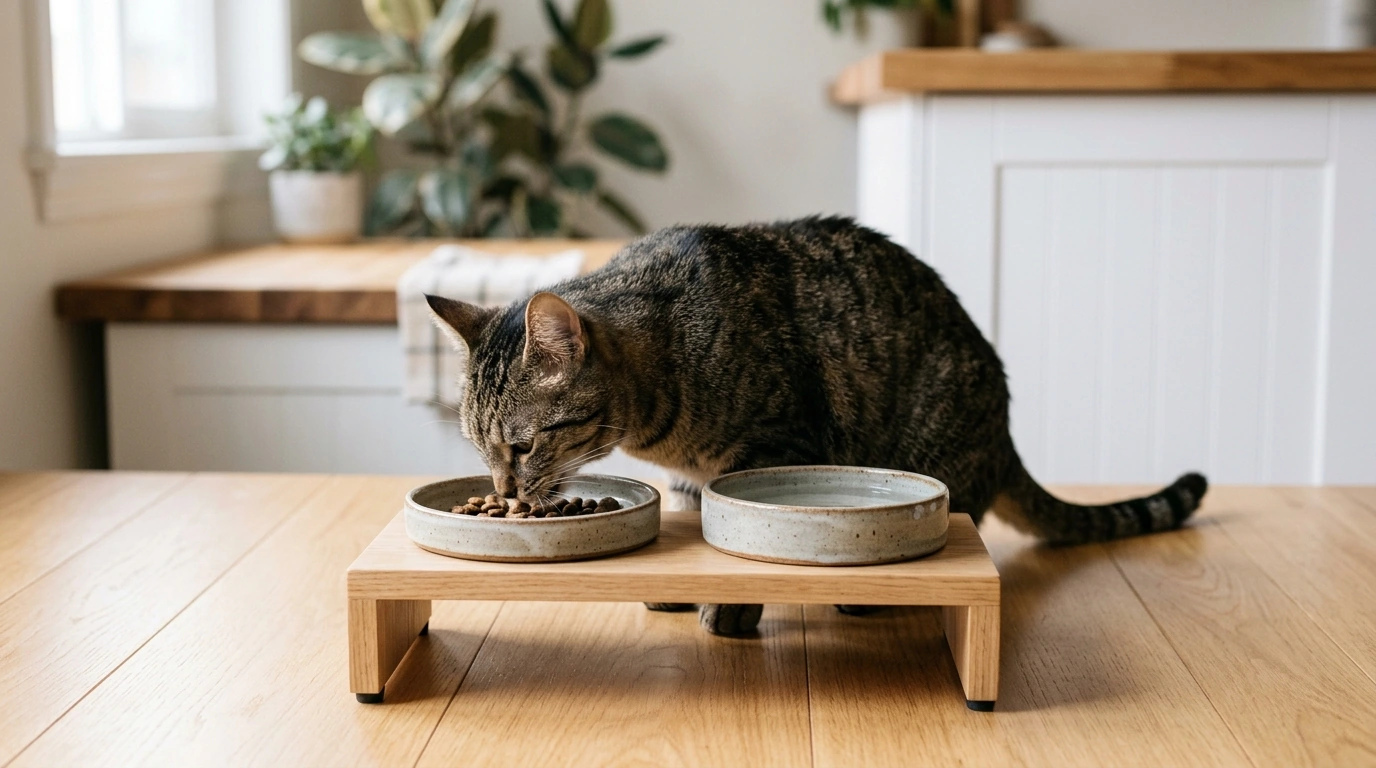
A well-designed feeding station can make daily meals calmer and cleaner. An elevated ceramic bowl set with a steady, anti-slip base helps reduce floor mess, keeps the bowl in place, and supports a more comfortable eating posture for many cats—especially fast eaters, seniors, and cats that nudge bowls while they eat.
Small changes in height and stability can have a noticeable impact on how relaxed a cat feels at mealtime. Many cats naturally prefer not to eat with their nose close to the floor, and a raised station can make feeding feel more “set up” and predictable.
If a cat is vomiting more often, coughing, or suddenly eating less after any feeding change, check in with a veterinarian or a trusted resource like the Cornell Feline Health Center to help rule out medical causes.
Material matters more than it seems. Ceramic is popular in cat households because it’s sturdy, it tends to stay put, and—when properly glazed—it cleans up easily without holding onto smells.
| Feature | Why it matters at home |
|---|---|
| Elevated bowl design | Encourages a more comfortable feeding posture for many cats and keeps bowls off the floor surface. |
| Anti-slip base | Helps prevent sliding, reduces spills, and keeps the feeding spot consistent. |
| Ceramic material | Easy to clean, less odor retention over time, and adds weight for stability. |
| Food + water pairing | Keeps essentials together; useful for households that like a single, tidy feeding station. |
| Stable, pet-friendly form | Supports calmer meals for cats that push bowls or get distracted by moving dishes. |
A stable base can be the difference between a neat feeding corner and daily cleanup. When a bowl skids, cats often adjust by stepping around it, pawing at it, or pulling food out to the floor—especially with lighter dishes.
No single bowl is perfect for every cat, so it helps to match the station to daily behavior. The best results typically come from choosing the style that solves the specific annoyance in your home—sliding, tipping, mess, or posture.
Even a great bowl performs better with a smart setup. A few small tweaks can help keep water rings off floors, prevent kibble scatter, and make daily wipe-downs faster.
For safe handling and storage habits—especially with wet food—review the FDA’s tips for safe handling of pet food.
If the goal is a tidier feeding area and a bowl that doesn’t wander across the kitchen, the Ceramic Elevated Cat Food and Water Bowl with Anti-Slip Base is designed as a sturdy, easy-to-clean daily station for both food and water. It’s suitable for wet food, dry food, and water, with an emphasis on stability and simpler cleanup.
| Item | Details |
|---|---|
| Name | Ceramic Elevated Cat Food and Water Bowl with Anti-Slip Base |
| Price | 44.51 USD |
| Availability | In stock |
| Product page | View product |
Many cats find raised bowls more comfortable, especially seniors or cats that dislike crouching, but preferences vary. If you notice vomiting, coughing, or appetite changes after switching bowls, discuss it with a veterinarian.
Food bowls are best washed daily, and water bowls should be washed frequently to reduce residue and biofilm. Regular cleaning also helps keep odors down and encourages consistent drinking.
Glazed ceramic is typically non-porous and less likely to hold odors the way scratched plastic can. Check for chips or cracks and clean routinely to keep the bowl hygienic.











Leave a comment