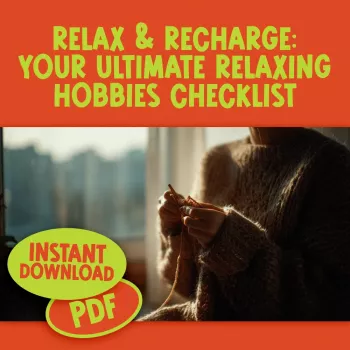
A calm hobby can turn scattered minutes into genuine recovery. This digital checklist is designed to make it easy to explore soothing activities, notice what actually restores energy, and build a simple self-care rhythm that fits real life—whether there are five minutes or a full afternoon to unwind.
A relaxing hobby isn’t about “being productive.” It’s about giving your mind and body a gentle place to land. The most effective options lower mental noise by offering a focused task that’s soothing instead of demanding—something your brain can follow without getting pulled into rumination.
Many people find mindful, low-stakes activities especially helpful for stress relief because attention shifts from looping thoughts to the present moment: hands moving, breath settling, or senses noticing warmth, texture, sound, and light. Over time, that shift can help the body exit “fight-or-flight” mode and return to a steadier baseline. The American Psychological Association notes that stress affects the body in wide-ranging ways, which is why small, repeatable calming practices can matter.
The sweet spot is a hobby that balances ease and engagement: not so demanding that it feels like work, and not so passive that the mind keeps racing. A good relaxing hobby is repeatable, accessible, and often leaves the body feeling softer—less tension in the jaw, shoulders, and hands.
The checklist works best when you choose based on the moment you’re actually having (not the one you wish you had). Start with three quick decisions:
When you’re done, rate it quickly: calmer, neutral, or more stirred up. Then circle the ones that reliably help so you can repeat them without overthinking.
| Time available | Energy level | Suggested relaxing hobbies | Best for |
|---|---|---|---|
| 5–10 min | Low | Box breathing, gentle stretching, warm tea ritual, doodling | Nervous system reset |
| 10–20 min | Low–Medium | Guided meditation, journaling, simple puzzles, tidying one small area | Mental clarity |
| 20–30 min | Medium | Coloring, knitting/crochet basics, calming playlists, slow walk | Mood lift without burnout |
| 30–60 min | Medium–High | Yoga flow, gardening tasks, baking something simple, creative writing | Healthy focus and release |
| 60+ min | Any | Nature time, art session, bath + book, hobby deep dive | Full recharge |
If you’re not sure where to start, pick a category that matches what your body is asking for—hands, mind, movement, nature, or cozy comfort.
For a simple, research-backed anchor, mindfulness practices can be a helpful bridge between “too busy” and “actually calm.” The NHS overview of mindfulness offers practical ways to begin without making it complicated.
A routine should reduce stress, not become another project. The easiest way is to keep a small menu and repeat what works.
If sleep is part of your reset plan, it helps to remember that stress and sleep often reinforce each other. The National Sleep Foundation shares guidance on healthy sleep and how stress can interfere—useful context when you’re building an evening wind-down ritual.
The goal is simple: make it easy to try calming activities, track what actually works, and repeat it without guessing. Relax & Recharge: Your Ultimate Relaxing Hobbies Checklist (Digital Download) is ready to use right away—digitally on a tablet/phone or printed for a screen-free experience.
Want to pair your calm time with a gentle outdoor cue? Nature-based hobbies can be easier when you create a small “reason to step outside,” like setting up Hanging Bird Bath Box and taking a few quiet minutes to watch visiting birds.
For evenings when winding down is the priority—especially during big life transitions—A Real-Life Guide to Better Sleep During Pregnancy (Digital Download) can complement your hobby routine with practical sleep support.
Choose based on your body state: tired (cozy/low-effort), wired (breathing or gentle movement), or restless (a simple hands-on task). Start with a 5-minute option that requires almost no setup, and aim for low-pressure activities where “good enough” is the point.
Yes—micro-sessions work well because they’re easy to repeat. Pair a 5–10 minute hobby with an existing routine (after lunch or after work) and track which options consistently create the biggest calming effect.
Go tactile and offline: coloring, knitting, puzzles, reading a few pages, stretching, or a short nature walk. A phone-free first 10 minutes helps your attention settle so the activity feels restorative instead of just “another input.”










Leave a comment