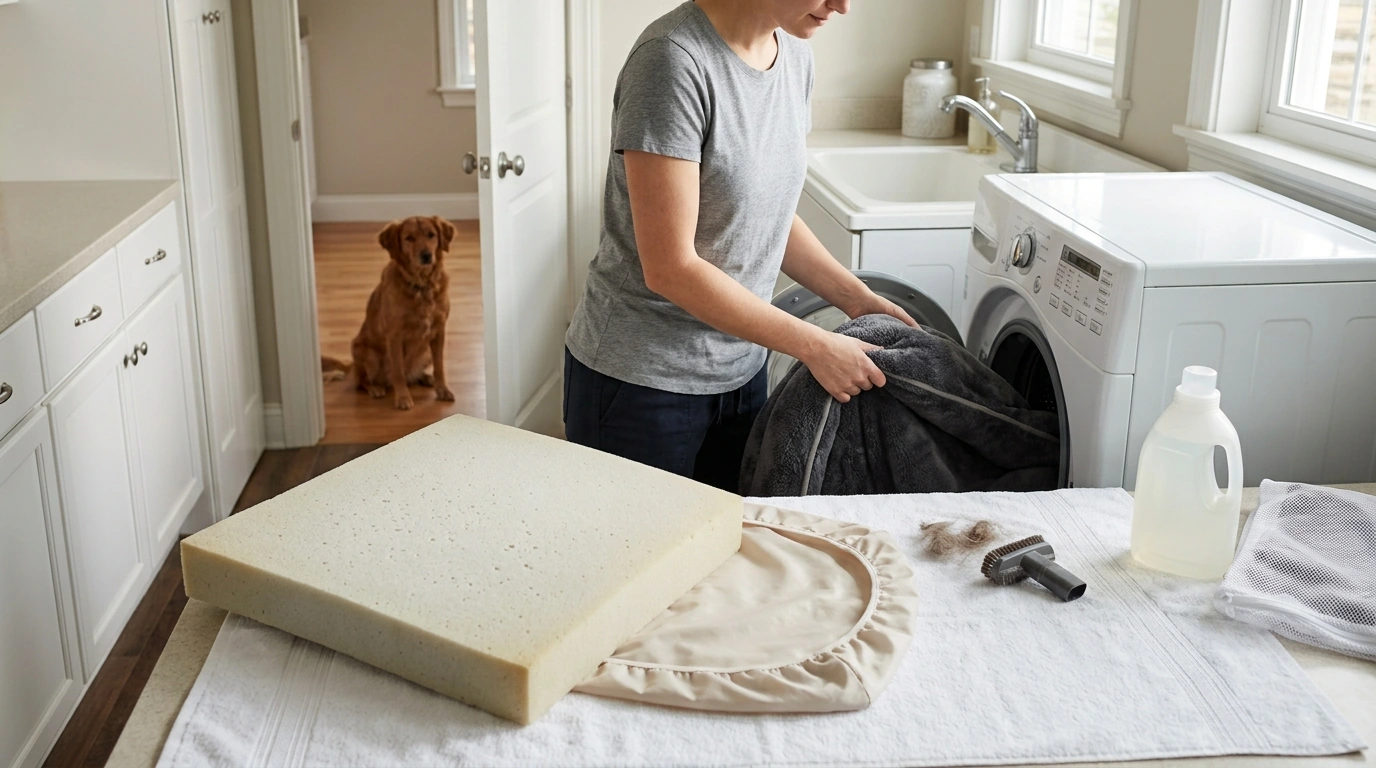
Pet beds collect hair, dander, drool, skin oils, pollen, and sometimes fleas or “mystery” stains—all of which can shorten the life of the fabric and fill if cleaned the wrong way. A safe wash routine keeps the bed supportive, prevents clumping, protects waterproof liners and zippers, and helps reduce odors and allergens without relying on harsh chemicals. If you stick to low heat, gentle agitation, and thorough rinsing, most beds can be refreshed regularly without losing shape or softness.
Start by figuring out what you’re actually washing. Many “pet beds” are a mix of materials that need different care.
A few minutes of prep saves your washer, prevents drain clogs, and helps detergent actually reach the fabric (instead of getting trapped in a layer of fur).
When in doubt, choose cooler water, a gentle cycle, and a mild detergent. Harsh chemicals and high heat are the fastest way to ruin a bed’s loft, waterproofing, and stitching.
| Bed component/material | Wash setting | What to avoid | Drying approach |
|---|---|---|---|
| Removable fabric cover (cotton/poly blend) | Cold/warm, gentle; mild detergent; extra rinse | Fabric softener; hot water if shrinking is possible | Low heat or air-dry; reshape seams while damp |
| Sherpa/fleece/plush cover | Cold, gentle; minimal detergent | High heat (matting); overdosing detergent (stiffness) | Air-dry or low heat; brush fluff after drying |
| Polyfill insert/bolster | Cold/warm, gentle; extra rinse | Overloading machine; high agitation; high heat | Low heat with dryer balls or air-dry; rotate and break up clumps |
| Memory foam slab | Spot-clean only unless label allows wash | Soaking; wringing; heat | Air-dry flat 24–48 hours; flip periodically |
| Waterproof liner | Cold, gentle (if washable) | Bleach; hot water; high heat drying | Air-dry or tumble no-heat |
For general hygiene best practices around pets, cleaning, and handwashing, see CDC Healthy Pets, Healthy People. If you’re choosing a gentler detergent, the EPA Safer Choice program is a useful reference point.
Most removable covers can be machine-washed on a gentle cycle, but inserts depend on the fill type. Foam slabs often do best with spot-cleaning and air-drying, and overloading the washer can damage seams and zippers.
Use cold or warm water on a gentle cycle with mild detergent and an extra rinse, then dry on low heat with dryer balls (or air-dry) while breaking up clumps. Avoid hot water, high heat, and high-agitation cycles that cause matting and lumping.
An enzymatic cleaner works best for urine odor—treat the area first and let it sit as directed before laundering with mild detergent and an extra rinse. Make sure the bed dries completely so moisture doesn’t lock in odor or lead to mildew.










Leave a comment