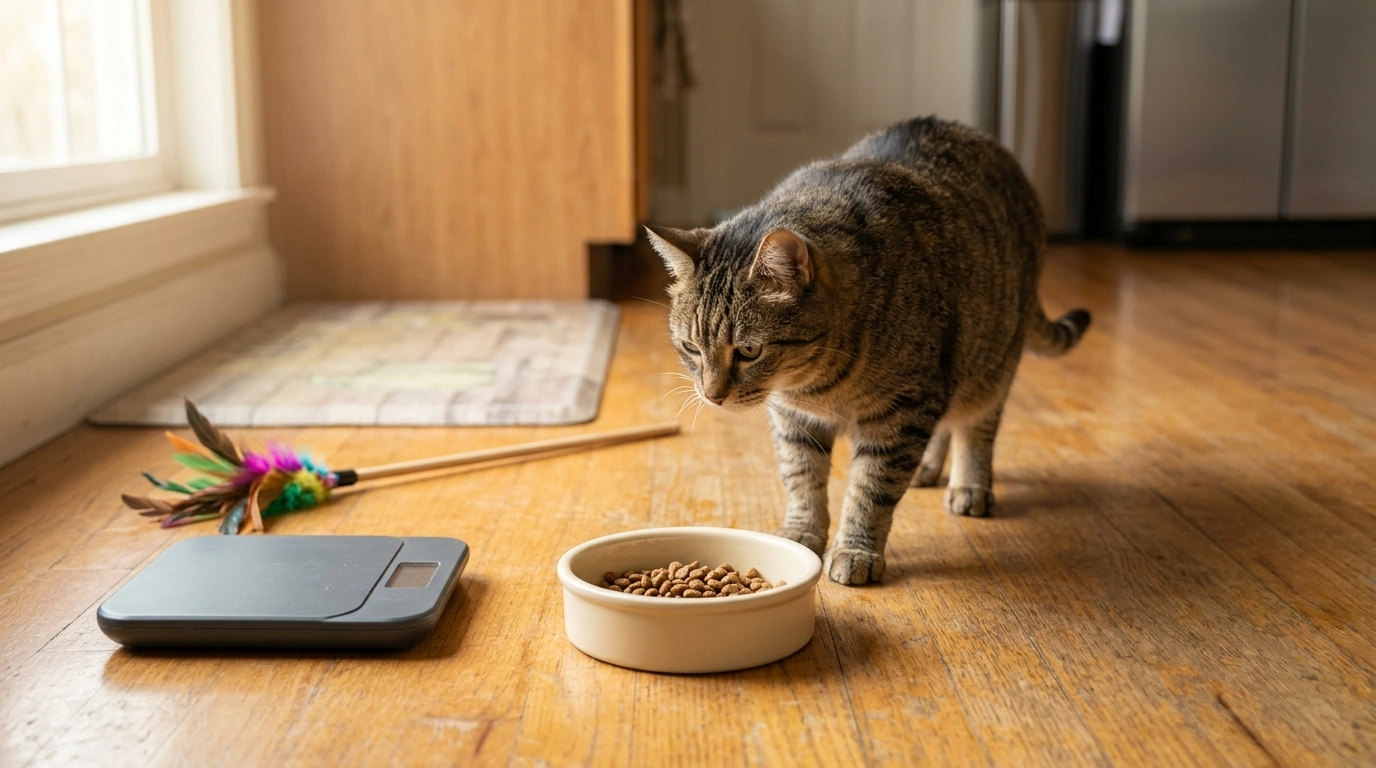
Extra pounds can sneak up on cats fast—especially indoor cats, grazers, and expert treat negotiators. The good news is that safe weight loss doesn’t require harsh restriction or stressful routines. It comes from a simple system: confirm the starting point, choose measured meals, build low-stress activity into the day, and track progress in a way that works in real life. Our team built the same structure into our digital guide so you can move from worry to a steady, vet-friendly routine you can actually repeat.
Before you change food or portions, get a clear baseline. You’re not looking for perfection—just a starting point you can compare against later.
| Check-in item | How to do it | What to record |
|---|---|---|
| Body feel (ribs/waist) | Gently feel ribs and look from above for a waist | Notes like “ribs easier to feel” or “waist slightly visible” |
| Weight | Use a pet scale or weigh yourself holding your cat, then subtract | Weekly weight and date |
| Meals & treats | Measure food; count treats as calories | Total daily amount and treat count |
| Activity | Short play sessions that get movement | Minutes played + which toys worked |
Most feline weight-loss success comes down to accurate portions and predictable structure—not “willpower” (yours or your cat’s). Small measuring errors add up quickly, especially with calorie-dense dry food.
If you want a ready-made framework for portions, routines, tracking pages, and gentle adjustments, our team put it all into Helping Your Cat Lose Weight the Smart Way (Digital Guide & Wellness Plan).
Most cats don’t want a 30-minute workout. They do want short, repeatable “bursts” that feel like hunting. That’s perfect for weight loss, because consistency beats intensity.
For deeper veterinary nutrition guidance, these resources can help you align your plan with best practices: AAHA and WSAVA. You can also explore feline weight management information from Cornell University College of Veterinary Medicine.
If you’re tired of guessing, our team designed a step-by-step path so you can focus on doing the basics well: starting assessment, feeding structure, activity ideas, tracking, and gentle adjustments. You can find it here: Helping Your Cat Lose Weight the Smart Way | Digital Guide for Pet Owners | What to Do When a Cat Is Overweight | Feline Health eBook & Wellness Plan.
If you’re browsing our shop for other digital downloads our team offers, you can also see Your Ultimate Young Leader’s Power Checklist | How to Be a Young Leader Digital Download and A Real-Life Guide to Better Sleep During Pregnancy | How to Improve Sleep in Pregnancy | Sleep Guide for Moms-to-Be | Digital Download.
Safe weight loss is gradual and ideally guided by your veterinarian, since rapid loss can be dangerous for cats. Track weekly trends and ask your vet for a target rate and calorie plan that fits your cat’s health profile.
Use scheduled meals, puzzle or slow feeders, and short play sessions before meals to reduce food anxiety. Pre-portion treats for the day, and if intense hunger is persistent or new, schedule a vet check.
A vet visit is strongly recommended, especially if weight gain is sudden or your cat’s appetite or energy has changed. Your veterinarian can rule out medical causes and help set a safe calorie target and pace.












Leave a comment