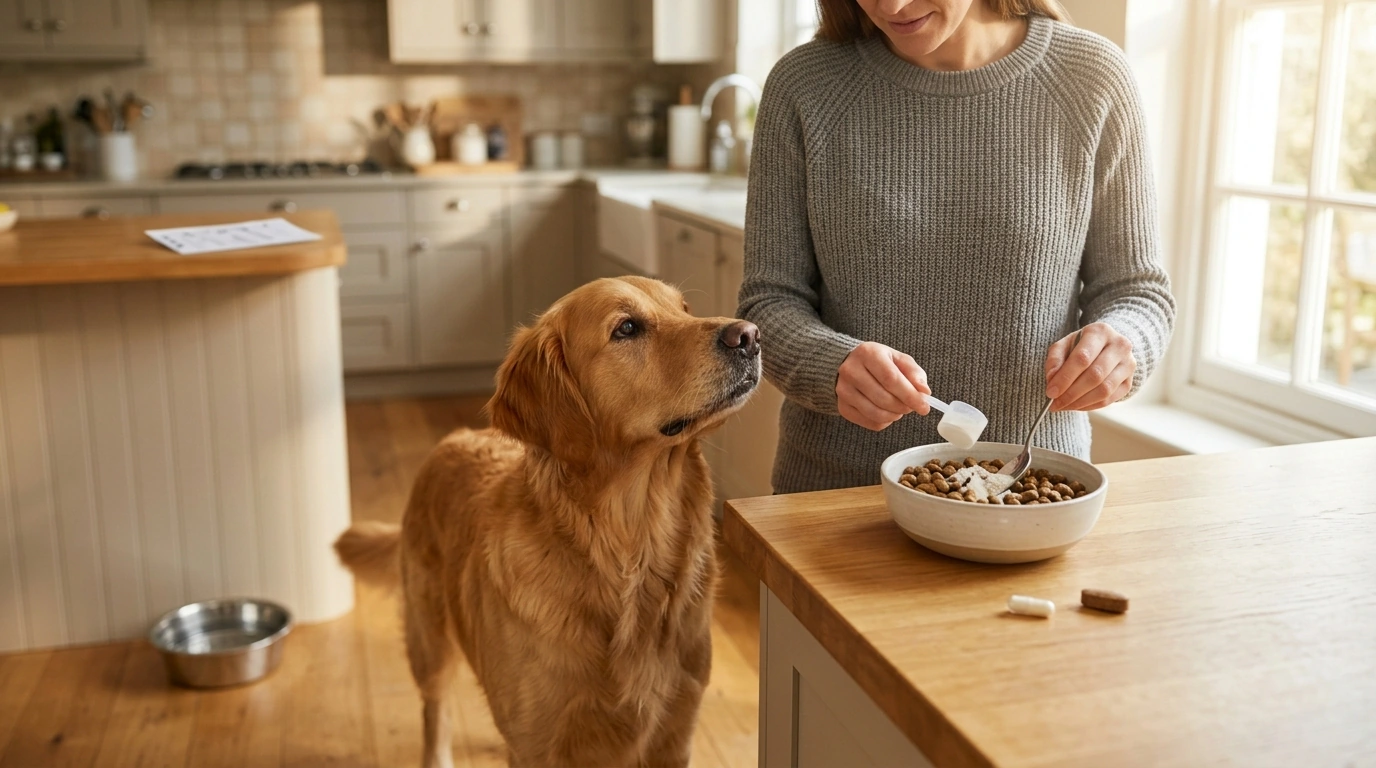
Digestive upset can show up as loose stools, gas, itchy skin flare-ups, or inconsistent appetite—often linked to diet changes, stress, medications, or an underlying illness. Probiotics can help support the gut microbiome, but results depend on choosing the right product type, introducing it correctly, and knowing when a veterinary exam matters more than supplements. Below is a practical, safety-first guide to how dog probiotics work, how to use them, and how to track meaningful changes in your dog’s comfort.
Your dog’s gut is home to a busy microbiome: a community of bacteria and yeasts that help break down food, produce beneficial compounds, and support the intestinal lining (often called the “gut barrier”). When that ecosystem gets disrupted—by sudden food switches, stress, antibiotics, or illness—some dogs develop gassiness, loose stools, or a “touchy” stomach.
Probiotics are live beneficial microbes. Prebiotics are specific fibers that feed beneficial microbes already living in the gut. Many products combine both (often labeled as “synbiotics”) to support a healthier balance.
Practical improvements owners often notice include firmer, more predictable stools, fewer stress-related diarrhea episodes (like after boarding or travel), less gas, and smoother food transitions. Still, probiotics are supportive care—not a cure for parasites, pancreatitis, inflammatory bowel disease (IBD), or infections that require targeted treatment and diagnostics. For a deeper overview of probiotics and prebiotics in veterinary medicine, see the Merck Veterinary Manual.
Many dogs do well with probiotics during common “gut disruption” moments, including soft stools, intermittent diarrhea, gassiness, stress-related tummy upset, a recent antibiotic course, switching foods, or a history of digestive sensitivity.
Some dogs also experience secondary benefits tied to stool quality—like less scooting when anal glands are irritated by chronically soft stool. In certain dogs with gut-skin sensitivity, improved digestion may coincide with calmer skin or a shinier coat (though skin issues can have many causes, including allergies and infections).
Skip the DIY approach and get veterinary guidance first if any red flags appear: blood in stool, black/tarry stool, repeated vomiting, severe lethargy, dehydration, rapid weight loss, or diarrhea that persists beyond 24–48 hours. Puppies and seniors can dehydrate quickly, so acute GI symptoms in these age groups deserve prompt evaluation.
Also consult a veterinarian before using probiotics if your dog is immunocompromised, on chemotherapy or high-dose steroids, or has severe chronic GI disease. In these situations, the “right” product and dosing strategy should be individualized.
Powders are easy to mix into meals and allow flexible dosing. Capsules can offer stable, precise dosing and are convenient for dogs who take pills well. Chews are simple for many households, but may add calories or contain extra flavors that don’t suit sensitive dogs. Pastes are often used for short-term support (like travel or mild acute loose stool) and can be easier for dogs who aren’t eating much.
Some probiotics require refrigeration; others are freeze-dried and stable at room temperature. Either way, heat and humidity can reduce potency. Look for clear strain names (genus, species, and strain), CFU counts stated through expiration (not only “at manufacture”), storage instructions, and evidence of lot or quality testing. General guidance on GI health and nutrition is also available through WSAVA resources.
| Microbe/Strain (example) | Common use case | Notes for choosing |
|---|---|---|
| Enterococcus faecium (e.g., SF68) | Loose stools; stress-related digestive upset | Look for strain-specific evidence; use products labeled for dogs and follow storage directions |
| Lactobacillus spp. (various strains) | General digestive support; gas and stool consistency | Benefits vary by strain; avoid vague labels that omit strain ID |
| Bifidobacterium spp. (various strains) | Gut microbiome support, especially with diet changes | Often paired with prebiotics; check for CFU through expiration |
| Saccharomyces boulardii (yeast) | Antibiotic-associated diarrhea; acute diarrhea support | Not a bacteria; can be useful short-term—vet guidance is recommended for complex cases |
Probiotics work best alongside basics that keep the gut steady: consistent meals, measured treats, adequate hydration, and gradual food changes over about 7–10 days. For additional consumer-friendly guidance, the American Kennel Club’s overview of probiotics for dogs can be a helpful starting point.
For a structured approach focused on canine digestive wellness and probiotic routines, consider Happy Tummies, Wagging Tails: The Smart Guide to Using Probiotics for Your Dog (Digital Download).
For stress-lowering enrichment that may indirectly support sensitive tummies during routine changes, some pet parents also like simple backyard additions such as the Hanging Bird Bath Box.
Some dogs show stool improvements within a few days, especially if the issue is mild and the diet stays consistent. A 2–4 week trial is more reliable because results depend on the strain, CFU potency, stress level, and what else is changing at the same time.
Daily use is common for dogs with sensitive stomachs or recurring stress-related upset. It’s still smart to reassess periodically and involve a veterinarian for chronic GI disease or if your dog has an immune-compromising condition.
Many dogs can take probiotics during antibiotic courses, but it’s usually best to separate doses by about 2–3 hours. If diarrhea is severe or ongoing, check in with a veterinarian to confirm the best option and to rule out complications.












Leave a comment