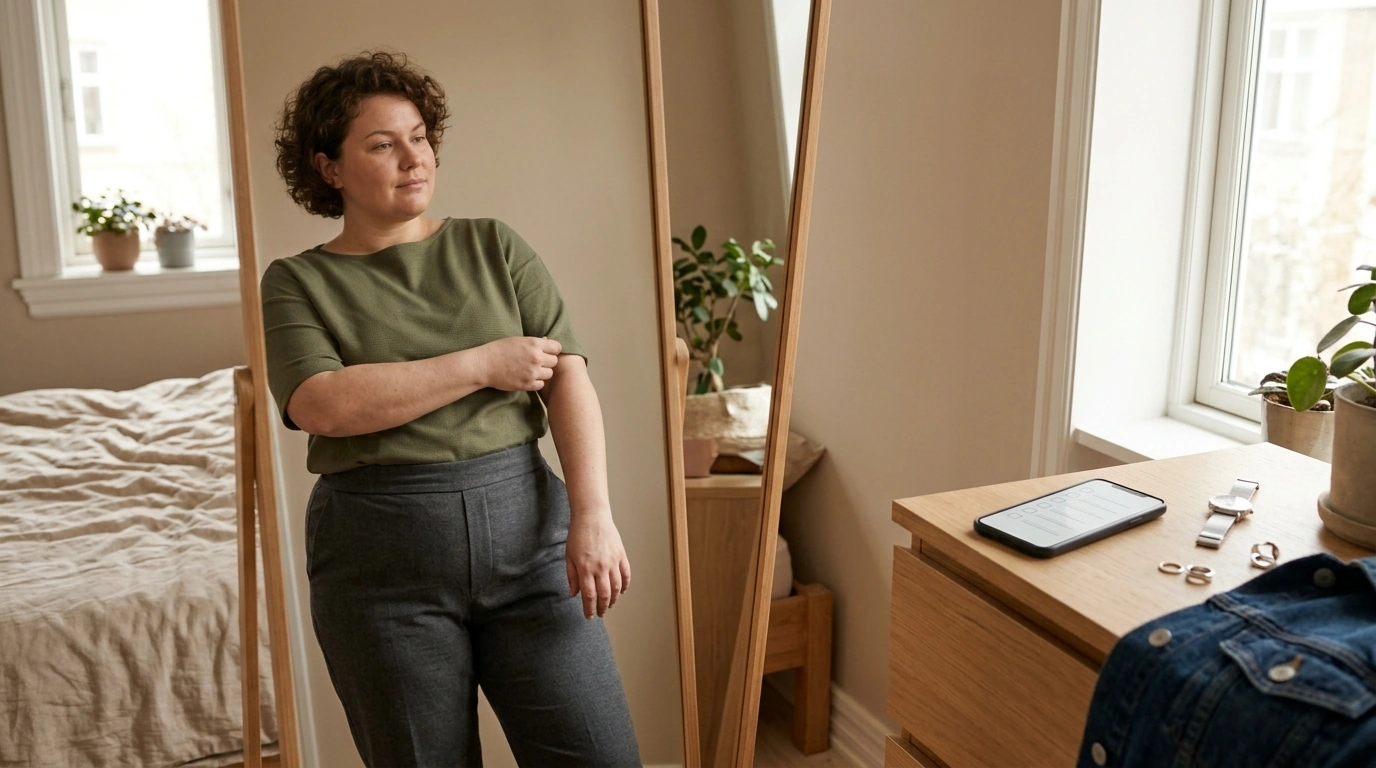
Feeling confident with a bigger stomach doesn’t require a “perfect” body—just practical tools that reduce self-conscious spirals and make getting dressed, going out, and being photographed feel less loaded. A checklist approach works because it turns confidence into small, repeatable actions: the kind you can do on a normal Tuesday, not just on your best day.
If body image stress has been weighing on you, you’re not alone. Resources like the American Psychological Association’s overview on body image and the Mayo Clinic’s guidance on positive body image reinforce a simple truth: healthier body image often comes from supportive habits and self-talk—not from chasing a single “fix.”
Owning your stomach doesn’t have to mean feeling amazing about it every moment. It can mean showing up anyway. It can mean choosing comfort without apology. It can mean taking up space at the table and staying in the moment—even when your brain tries to pull you back into self-monitoring.
| Situation | Old autopilot | New confident option |
|---|---|---|
| Getting dressed | Change outfits repeatedly and delay plans | Pick a go-to silhouette and leave on time |
| Photos | Hide behind others or refuse pictures | Choose one pose and take one photo—then rejoin the moment |
| Body comments | Nervous laugh or self-deprecation | Use a short boundary line and change the topic |
| Bloating days | Cancel or wear only oversized clothing | Comfort-first outfit with one intentional detail (color, jewelry, shoes) |
| Social media | Compare and spiral | Curate feed + take a 24-hour comparison break |
The best confidence routines are short enough to do when you’re tired, rushed, or already feeling self-conscious. The goal isn’t to “win” body image; it’s to interrupt the spiral and return to your life.
If you want a ready-to-use version you can keep on your phone or print out, the Confidence Kickstart Checklist digital download is designed to make these steps fast to follow on real-life days (not just “ideal” ones).
Confidence gets harder when your clothes keep calling attention to the one area you’re trying not to monitor. Instead of dressing to disappear, dress to feel steady.
Rest also affects resilience. If stress and poor sleep are adding fuel to body-image spirals, a structured routine can help you feel more grounded day to day. The A Real-Life Guide to Better Sleep During Pregnancy (Digital Download) is a targeted option for moms-to-be who want practical, realistic sleep support.
To keep it simple, start here: download the Confidence Kickstart Checklist: Own Your Big Stomach Boldly (Digital Download PDF), pick five lines that feel doable, and repeat them until they feel familiar.
Body neutrality helps: focus on comfort, function, and participation rather than forcing positive feelings. Try a simple script like, “My stomach is part of my body today, and I can still show up,” then take one small action (wear the outfit, take one photo, go to the plan) to build real evidence over time.
Use a short boundary that matches the situation: “I’m not discussing my body,” “Let’s talk about something else,” or “Please stop commenting on my stomach.” If it keeps happening, it’s reasonable to repeat the boundary more firmly or step away from the conversation.
Yes—self-esteem grows through repeatable behaviors that prove you can handle discomfort and still participate in life. A checklist reduces decision fatigue on hard days and gives you consistent practice, which is often what makes confidence feel more stable.








Leave a comment