HomeBlogBlogHow to Wash Pet Beds Safely (No Clumps or Damage)

How to Wash Pet Beds Safely (No Clumps or Damage)

How to Wash Pet Beds Safely (No Clumps or Damage)

Fresh & Fluffy: Wash Pet Beds Safely Without Damage

Pet beds collect hair, dander, drool, skin oils, pollen, and sometimes fleas or “mystery” stains—all of which can shorten the life of the fabric and fill if cleaned the wrong way. A safe wash routine keeps the bed supportive, prevents clumping, protects waterproof liners and zippers, and helps reduce odors and allergens without relying on harsh chemicals. If you stick to low heat, gentle agitation, and thorough rinsing, most beds can be refreshed regularly without losing shape or softness.

Before Washing: Identify the Bed Type and What Can Go Wrong

Start by figuring out what you’re actually washing. Many “pet beds” are a mix of materials that need different care.

  • Check the care label and any inner tags; follow water temperature, drying, and bleach warnings when present.
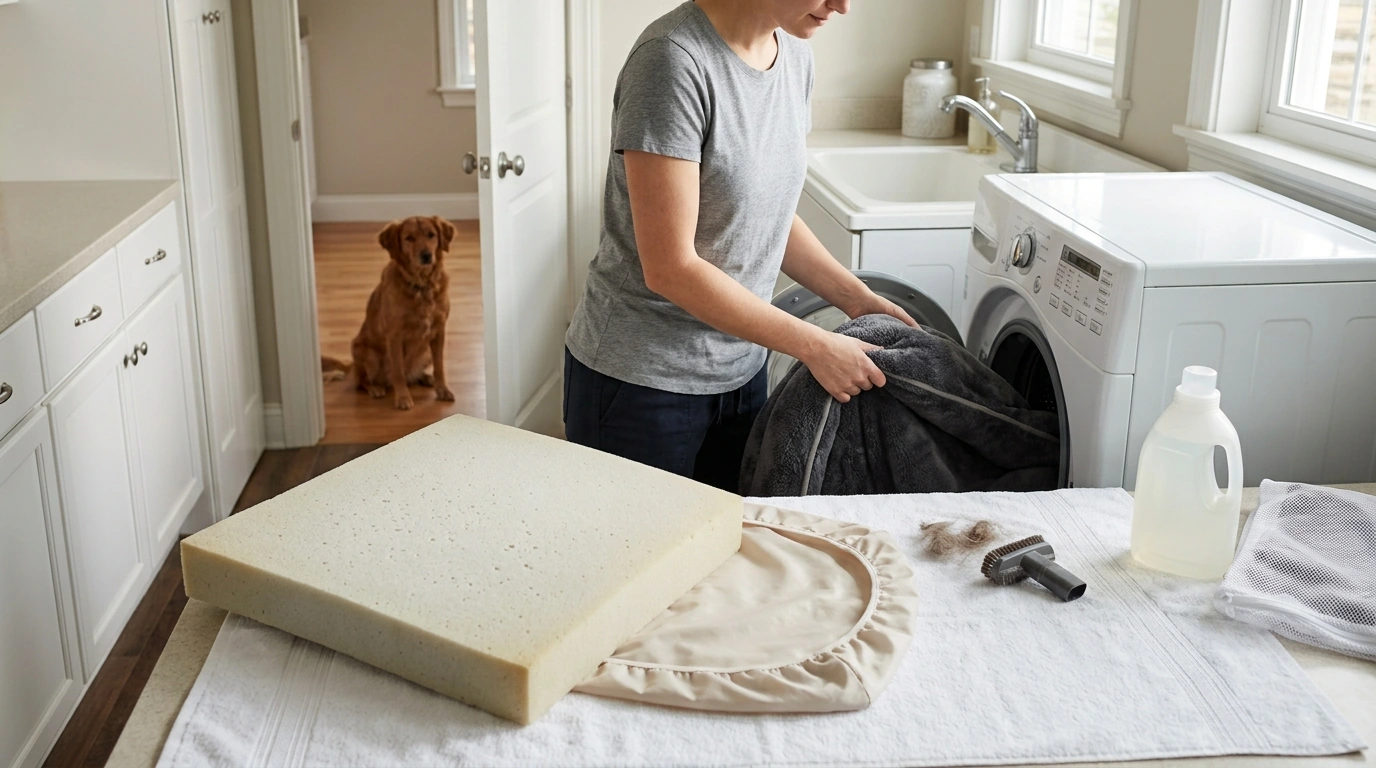
  • Separate the parts: removable cover, inner cushion, bolsters, waterproof liner, foam slab, or shredded fill insert.
  • Common failure points include zipper damage, seam blowouts from overloading, foam cracking from heat, polyfill clumping from high agitation, and waterproof membranes delaminating in hot water or high-heat drying.
  • If the cover is non-removable, plan for spot-cleaning plus a controlled full wash (extra rinse, low agitation) only when necessary.
  • Take quick photos of how inserts fit so reassembly is fast and the bed keeps its intended shape.

Prep That Prevents Hair Clogs and Wash-Load Chaos

A few minutes of prep saves your washer, prevents drain clogs, and helps detergent actually reach the fabric (instead of getting trapped in a layer of fur).

  • Remove loose hair first: vacuum with an upholstery attachment, use a rubber grooming brush, or run a lint roller over high-shed areas.
  • Shake outdoors and gently beat the bed to release sand, crumbs, and dried debris before it hits the machine.
  • Pre-treat stains: enzymatic cleaner for urine/vomit, mild dish soap for greasy spots, and an oxygen-based booster for set-in organic stains.
  • Close zippers, secure Velcro, and turn covers inside out to protect the face fabric.
  • Use a large laundry bag for small covers or beds with straps to minimize tangling.

Safe Washing Methods (Machine vs. Hand) That Protect Fill and Fabric

When in doubt, choose cooler water, a gentle cycle, and a mild detergent. Harsh chemicals and high heat are the fastest way to ruin a bed’s loft, waterproofing, and stitching.

Machine-wash basics

Hand-wash option for delicate beds

Quick Settings Guide by Material

Bed component/material Wash setting What to avoid Drying approach
Removable fabric cover (cotton/poly blend) Cold/warm, gentle; mild detergent; extra rinse Fabric softener; hot water if shrinking is possible Low heat or air-dry; reshape seams while damp
Sherpa/fleece/plush cover Cold, gentle; minimal detergent High heat (matting); overdosing detergent (stiffness) Air-dry or low heat; brush fluff after drying
Polyfill insert/bolster Cold/warm, gentle; extra rinse Overloading machine; high agitation; high heat Low heat with dryer balls or air-dry; rotate and break up clumps
Memory foam slab Spot-clean only unless label allows wash Soaking; wringing; heat Air-dry flat 24–48 hours; flip periodically
Waterproof liner Cold, gentle (if washable) Bleach; hot water; high heat drying Air-dry or tumble no-heat

Drying Without Clumps, Shrinkage, or Melted Liners

Odor and Allergen Control (Without Damaging Materials)

  • Use enzymatic cleaners for biological odors (urine, vomit) and allow adequate dwell time before washing.
  • For general funk, a small amount of baking soda in the wash may help if the label allows; rinse thoroughly to avoid buildup.
  • Skip essential oils—many are unsafe for pets and can irritate sensitive noses and skin.
  • For allergy-prone households: vacuum weekly, wash covers every 2–4 weeks, and use an extra rinse to remove dander and detergent residue.
  • If fleas are a concern, follow a full home-and-pet plan from a veterinarian; laundering alone rarely solves an infestation. Helpful background: ASPCA guidance on flea treatment and prevention.

For general hygiene best practices around pets, cleaning, and handwashing, see CDC Healthy Pets, Healthy People. If you’re choosing a gentler detergent, the EPA Safer Choice program is a useful reference point.

A Simple Schedule That Keeps Beds Fresh Longer

Troubleshooting: Fix Common Post-Wash Problems

Product Spotlight: A Step-by-Step Cleaning Plan

FAQ

Can a pet bed go in the washing machine?

Most removable covers can be machine-washed on a gentle cycle, but inserts depend on the fill type. Foam slabs often do best with spot-cleaning and air-drying, and overloading the washer can damage seams and zippers.

How do you wash a pet bed without ruining the stuffing?

Use cold or warm water on a gentle cycle with mild detergent and an extra rinse, then dry on low heat with dryer balls (or air-dry) while breaking up clumps. Avoid hot water, high heat, and high-agitation cycles that cause matting and lumping.

What removes urine smell from a pet bed safely?

An enzymatic cleaner works best for urine odor—treat the area first and let it sit as directed before laundering with mild detergent and an extra rinse. Make sure the bed dries completely so moisture doesn’t lock in odor or lead to mildew.


Was this article helpful?

Yes No
Leave a comment
Top

Shopping cart

×