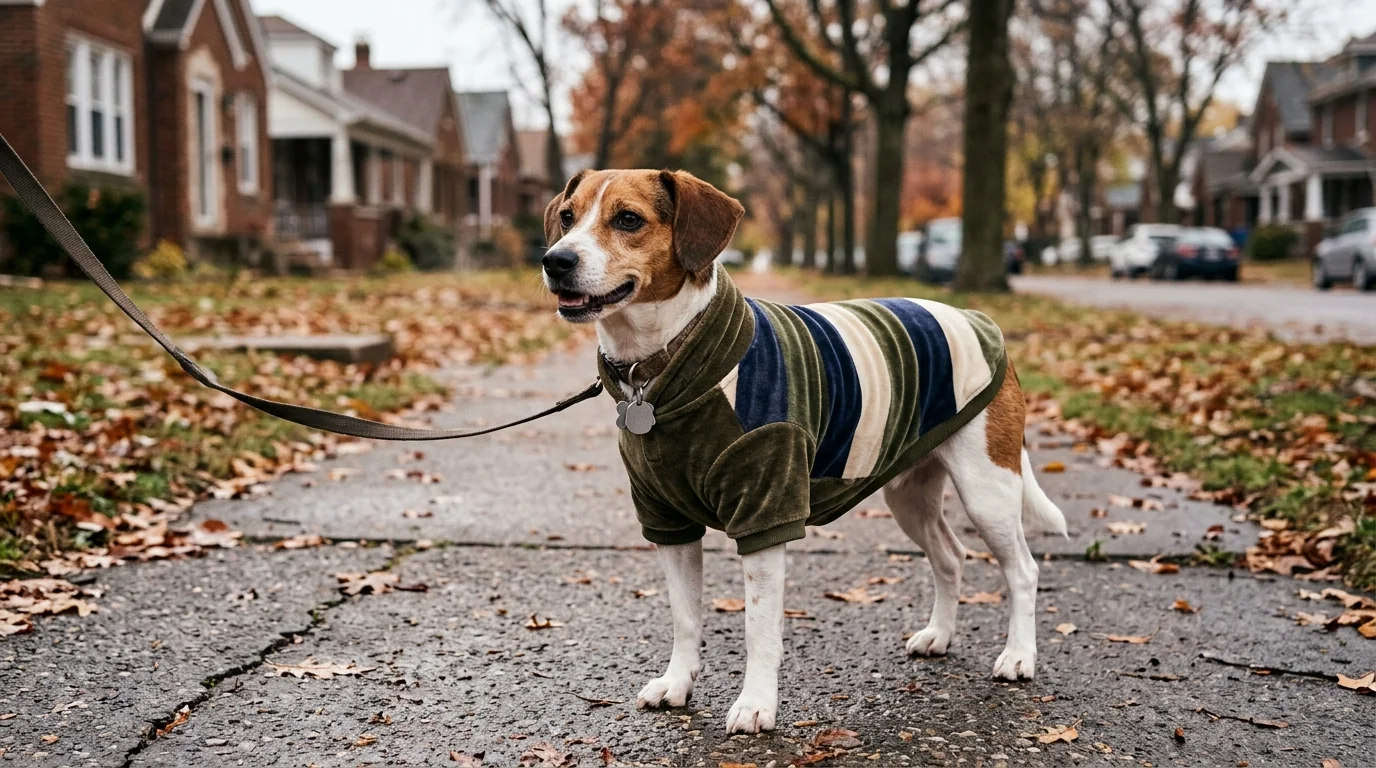
Cold walks can feel extra long when a small dog starts shivering, hesitating at the door, or rushing through potty breaks. A soft, easy-to-wear coat helps take the edge off brisk weather so outdoor time stays comfortable. Our Striped Velvet Dog Coat for Small Dogs is made for everyday warmth and a snug, stylish layer—perfect for quick errands, morning walks, and cool evenings when indoor heating doesn’t fully reach the floor where little paws live.
Small bodies cool down quickly, and that can change your routine fast—especially if your dog is already sensitive to weather shifts. A coat is most helpful when you want your dog to stay focused and comfortable outside instead of hurrying back in.
For broader cold-weather safety reminders (like paw protection and time limits outdoors), the AVMA cold weather pet safety guidance and the AKC cold weather safety tips are solid references.
When your dog is small, “warm enough” and “easy enough” matters. You want a coat that goes on quickly, feels comfortable, and doesn’t turn every outing into a wrestling match.
| Your routine | Why a soft coat helps | What to look for during wear |
|---|---|---|
| Short potty breaks | Keeps a small body warmer so your dog can focus on the task | Back covered; belly not overly restricted |
| Morning/evening walks | Adds comfort during temperature dips and wind | No rubbing at armpits; free shoulder movement |
| Car rides & errands | Reduces chill when moving between warm and cold spaces | Easy to remove; doesn’t snag harness/leash |
| Indoor drafts | A cozy layer for homes with cool floors | Dog can sit/lie comfortably without bunching |
The right size is what makes a coat feel cozy instead of distracting. Before you order, grab a soft tape measure and measure your dog while they’re standing naturally.
If your dog wears a harness, the goal is a smooth, stable “stack” so nothing pinches, rubs, or shifts when your dog picks up speed.
With soft fabrics, a little routine care goes a long way. The goal is to keep the coat clean enough for comfort without rough handling that can dull the finish.
Measure your dog’s neck circumference, chest girth at the widest point, and back length from the base of the neck to the base of the tail. If your dog lands between sizes, prioritize a comfortable chest fit, then do a two-finger comfort check and a quick indoor movement test.
A coat is helpful when your dog is small, short-haired, senior, or tends to shiver—especially during cold mornings/evenings, wind, or damp weather. If you notice shivering, paw-lifting, or reluctance to walk, adding a layer and shortening the outing can keep your dog more comfortable.
Yes, as long as the coat stays smooth under harness straps and doesn’t rub at the armpits, chest, or neck. Keep any under-layers thin and do a short test walk to confirm full shoulder movement and stable fit.











Leave a comment